
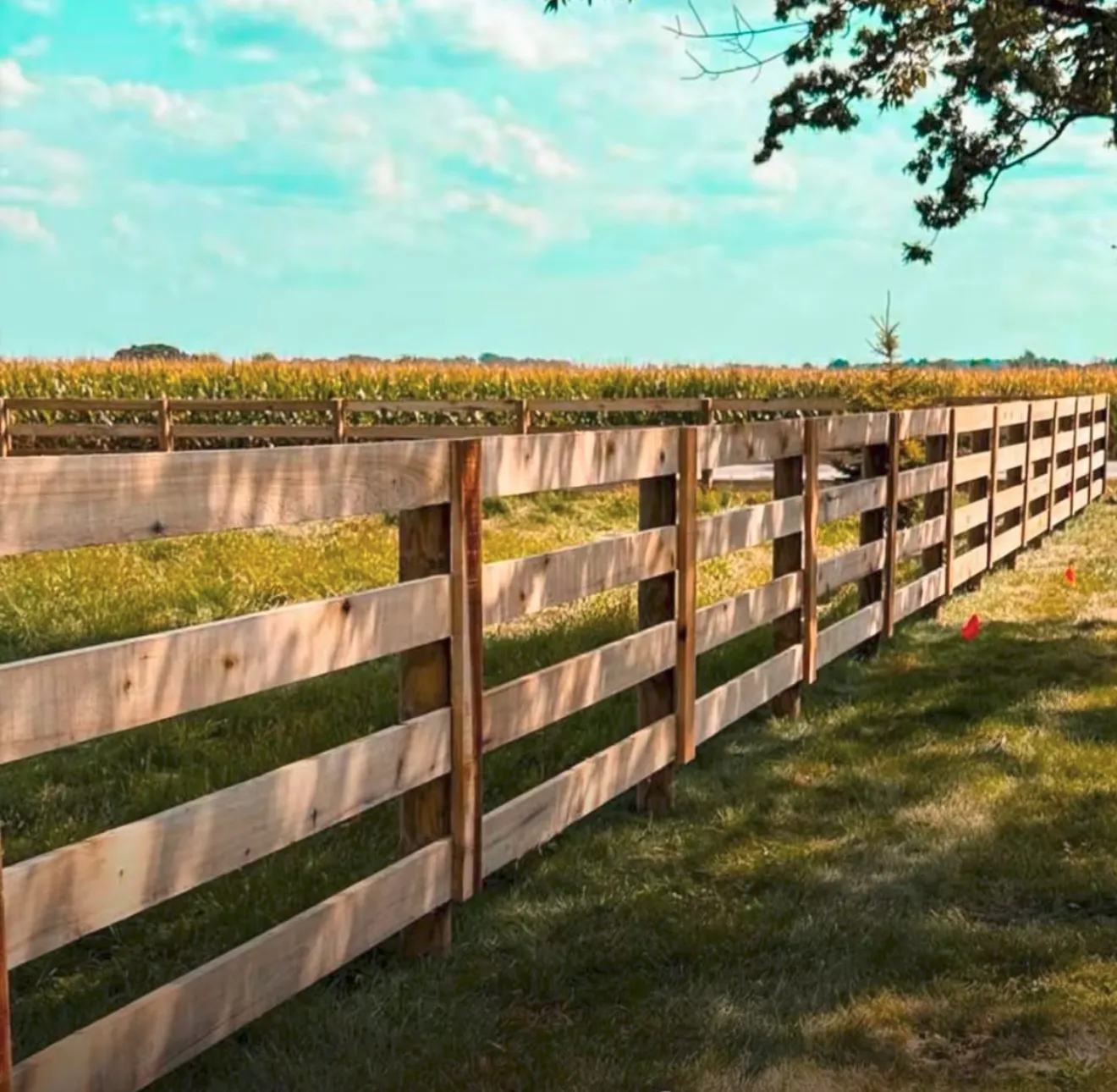
Horse Fences
What A Class Fencing builds
About Our Horse Fences
Horses need a fence that's visible (so they don't run into it), safe (no protruding nails, sharp wire, or tight gaps), and forgiving (gives a little before it breaks them or itself). A Class Fencing builds horse fencing across Foothills County, Rocky View County, Mountain View County, and the country surrounding Calgary.
Free On-Site Estimate
Get Your Horse Quote
Tell us about your project. A Class Fencing replies within 24–48 hours with an honest, written quote — no pressure, no surprise fees.
More About Horse Fences
Built For Alberta — The A Class Way
Horse fencing is the most demanding paddock fence to build right. The wrong fence can cost a horse — a kicked-through rail, a leg through woven wire, an electric line that won't quit. A Class Fencing has built horse fencing across Foothills County, Rocky View County, Mountain View County, and acreage country surrounding Calgary, Cochrane, Okotoks, Black Diamond, Turner Valley, and the foothills. Our horse fences are spec'd for the breed, use, and turn-out style of the property.
Our most-recommended horse fence build is 4 or 5-rail flexible vinyl on the top with no-climb V-mesh wire underneath, and a hot top-wire for training reinforcement. The vinyl flexes when a horse leans on it, the V-mesh keeps hooves from going through, and the hot wire keeps them off the rail in the first place. Heights run 54 to 60 inches for most paddocks, taller for stallions or jumpers.
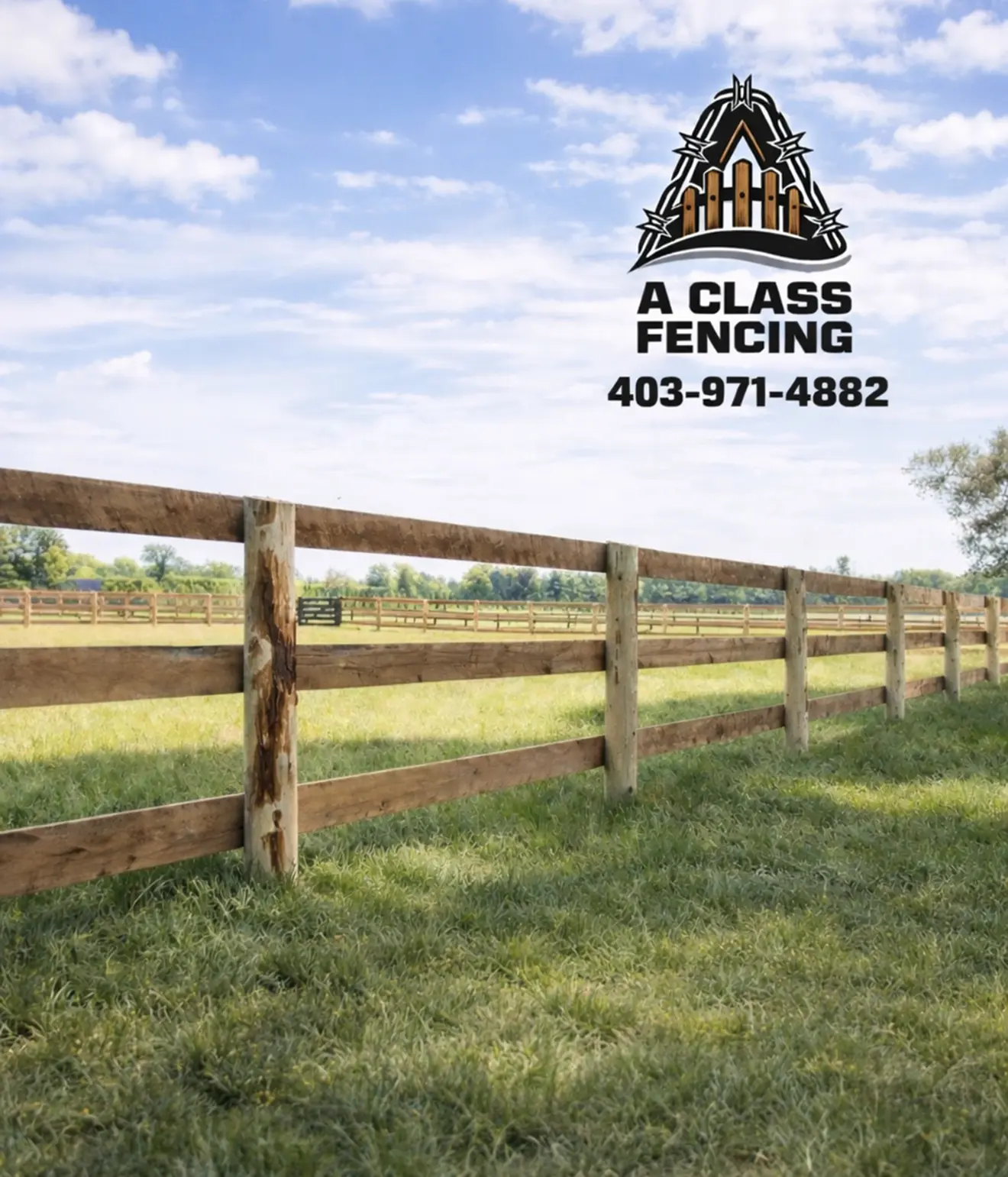
A Class Fencing also builds classic 3 and 4-rail wood post and rail (the look most owners picture when they say "horse fence"), high-tensile electric for managed rotation pastures, and round-pen panels for training enclosures. Whatever the build, every gate is sized for tractors and trucks, every corner is properly braced, and every fence is built to the kind of standard you'd want around your own horses.
Alberta weather and the horse-property layout shape every horse fence build. Foothills wind can stress rails that aren't properly braced. Snow drift patterns affect where you place gates and paths. Freeze-thaw cycles can lift improperly-set posts and shift gate alignment. A Class Fencing builds horse fence for the actual conditions: posts 4+ feet deep in concrete on corners, pressure-treated lumber, heavy-duty gate hardware that handles being leaned on, and electric grounding rods sized for dry Alberta summers (without proper grounding, hot wire is unreliable).
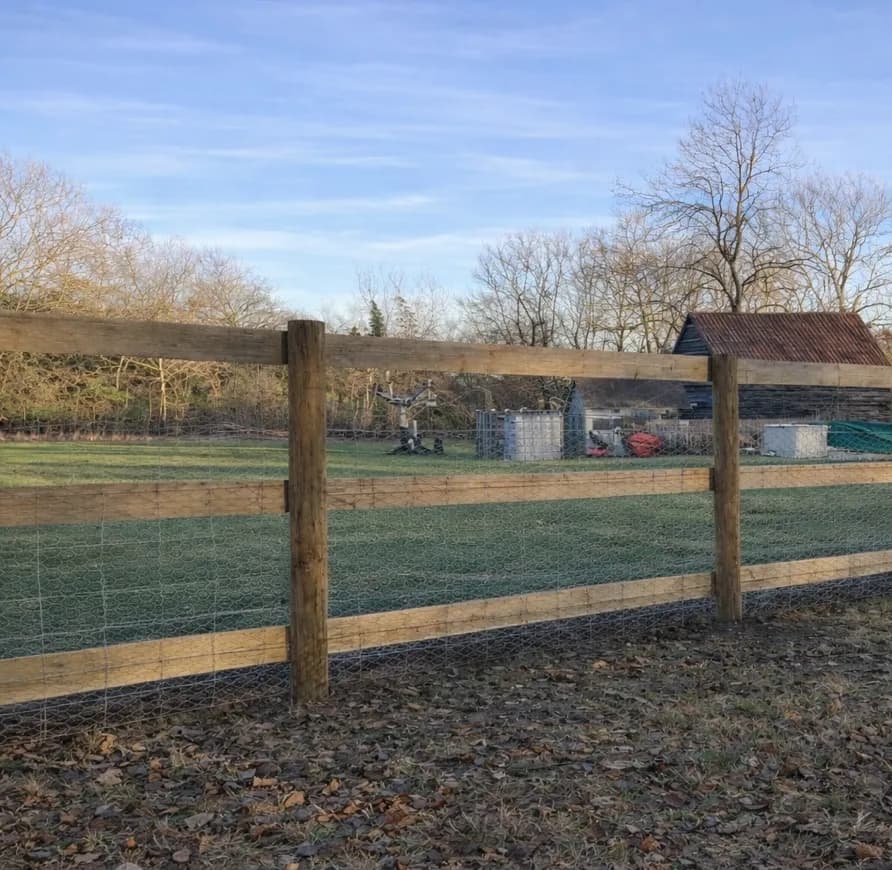
Horse fence cost runs higher than basic agricultural fence because the spec is higher. Vinyl-on-mesh with electric tops typically runs $30-$60 per linear foot installed. Wood post-and-rail with V-mesh backing is mid-range. Plain 3-rail wood post-and-rail (no wire backing) is the cheapest option but only suitable for trained, low-pressure horses. We quote each paddock as its own line item so you can scope by section — entrance approaches at the top spec, back pastures at a more cost-effective spec.
Maintenance on horse fence is mostly about checking the small things: rail attachments where horses lean and rub, gate hardware that handles daily traffic, electric system grounding (especially in dry summers when the ground conducts less), and wire tension. Walk every paddock twice a year, tighten what needs tightening, and the fence runs decades.
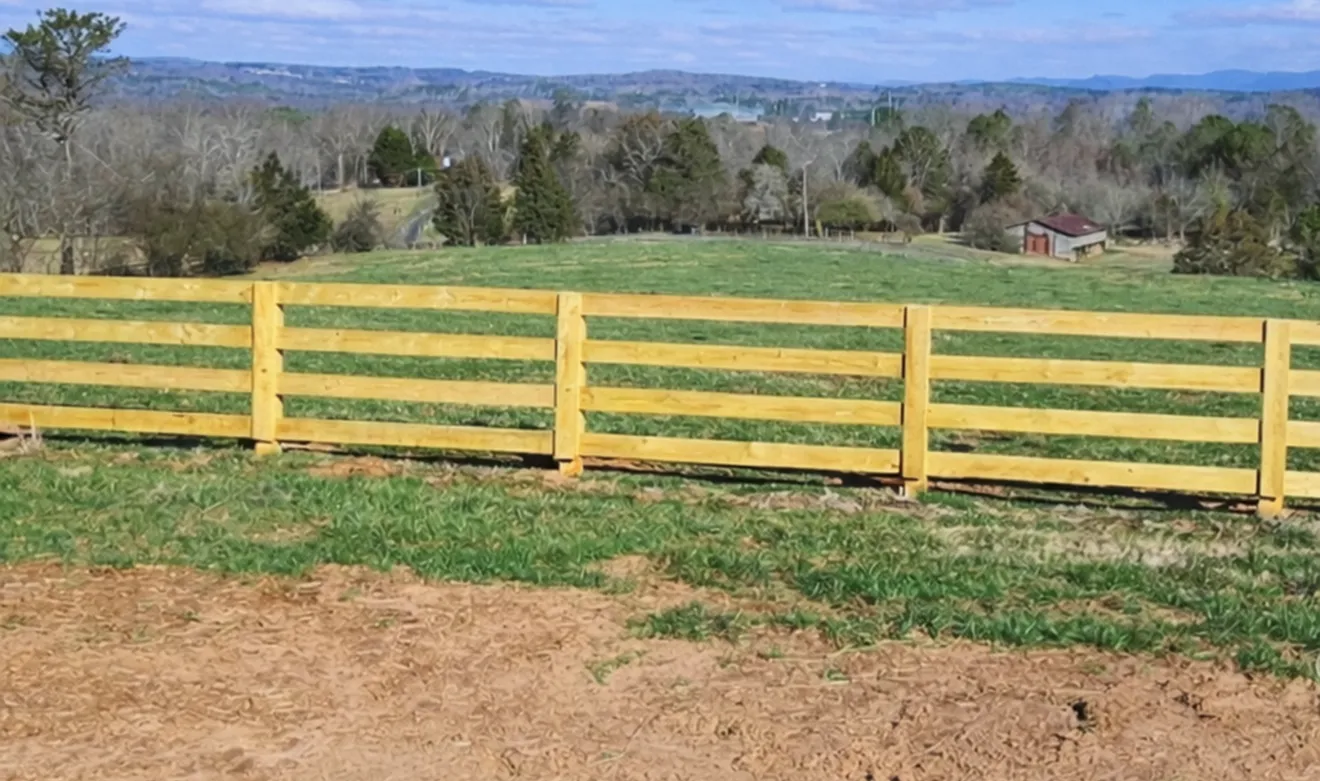
Every horse fence build comes with a workmanship warranty in writing. Process: walk the property, lay out paddocks together, written quote within 48 hours broken out by paddock, deposit confirms the install date. Typical single-paddock build is 3-5 days; full-property multi-paddock builds 1-3 weeks. Call (403) 971-4882 or request a free estimate online.
Where A Class Fencing builds horse fences: We install horse fences across Calgary, Airdrie, Cochrane, Okotoks, Chestermere, and High River, plus the surrounding Foothills County, Rocky View County, and Mountain View County.
Ready to start?
Free on-site estimate. Honest written quote. Built by A Class Fencing — Calgary's trusted fence builders.
Common Questions
Horse Fences FAQ
What's the safest horse fence?
+
Flexible vinyl rail on top (4 or 5-rail) with no-climb V-mesh wire underneath, and a hot top-wire to keep horses off the rail. The vinyl flexes on impact (won't splinter or break sharp like wood can), the V-mesh keeps legs and hooves from going through, and the electric trains them to stay off. This is what we recommend for most horse properties.
How tall should a horse fence be?
+
54-60 inches for most riding-horse paddocks. 60-72 inches for stallions, jumpers, or aggressive turn-out herds. 48 inches is the minimum acceptable for trained horses in a low-pressure paddock; we don't recommend going lower.
Do I need electric on a horse fence?
+
Strongly recommended. A single hot top-wire dramatically reduces rail-chewing, leaning, and reaching-over behaviour. It also trains horses to respect the fence so the physical barrier doesn't get tested constantly. We install dedicated grounding rods (3-foot copper-clad, three in series) so the system works in dry Alberta summers.
Is barbed wire safe for horses?
+
No. We don't recommend barbed wire anywhere a horse can reach it. Horses panic and run when caught in barbed wire, and the injuries are severe. For horse perimeters we use smooth high-tensile, page wire (V-mesh), or rail with V-mesh backing — never barbed.
Can you build a round pen?
+
Yes. Standard round pens are 50-60 ft diameter, built with continuous-rail panels or solid-rail vinyl. We also build covered round pens and indoor arena perimeter fencing.
Related Fencing Services
Also Built By A Class Fencing
Paddock & Livestock Fences
Safe, visible containment for paddocks, turn-outs, and small lots.
View Paddock & Livestock Fences in Calgary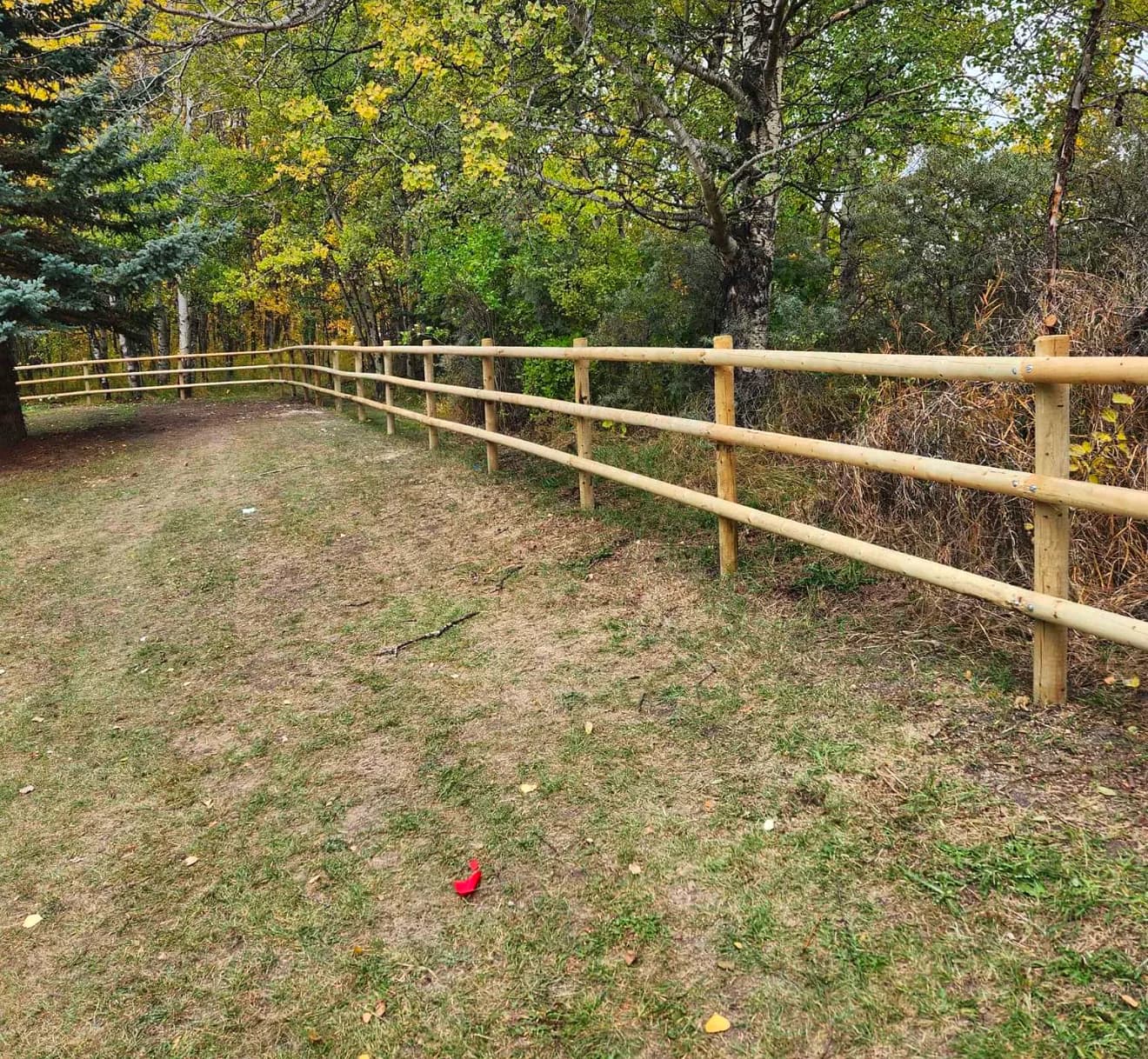
Post & Rail Fences
Classic ranch-style fencing for laneways, paddocks, and entrance approaches.
View Post & Rail Fences in CalgaryFarm & Acreage Fences
Long runs, uneven ground, miles of property line — handled.
View Farm & Acreage Fences in CalgaryOur work
Horse Fences & More
Recent horse fences builds first, followed by everything else A Class Fencing has built across Calgary and Southern Alberta.
No pressure. No surprises.
Ready to start your horse fences project?
Free on-site estimate. No pressure. Honest written quote from A Class Fencing.